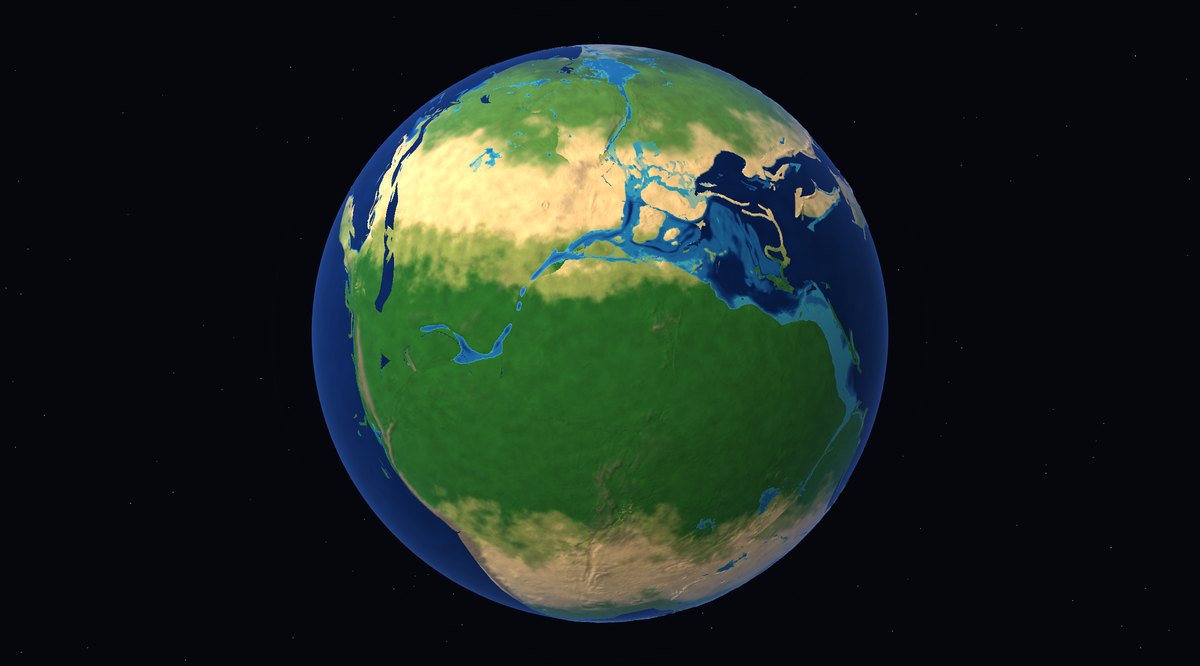
Pangea to today
Where were the continents when the dinosaurs lived — and where are they going?
Launch ↗Teacher notesWatch the continents drift into Pangea and apart again, drain the oceans and follow a rock from lava to sand.
Where were the continents when the dinosaurs lived — and where are they going?
Launch ↗Teacher notes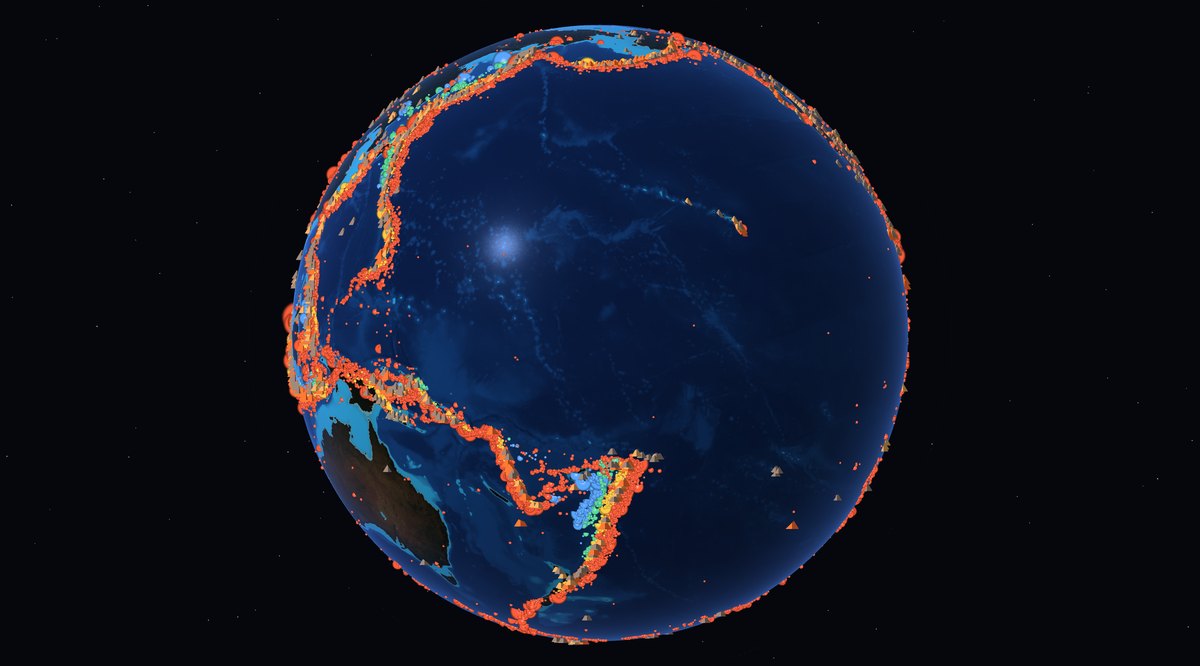
Why do earthquakes and volcanoes happen where they do — and how do we know what is inside the Earth?
Launch ↗Teacher notes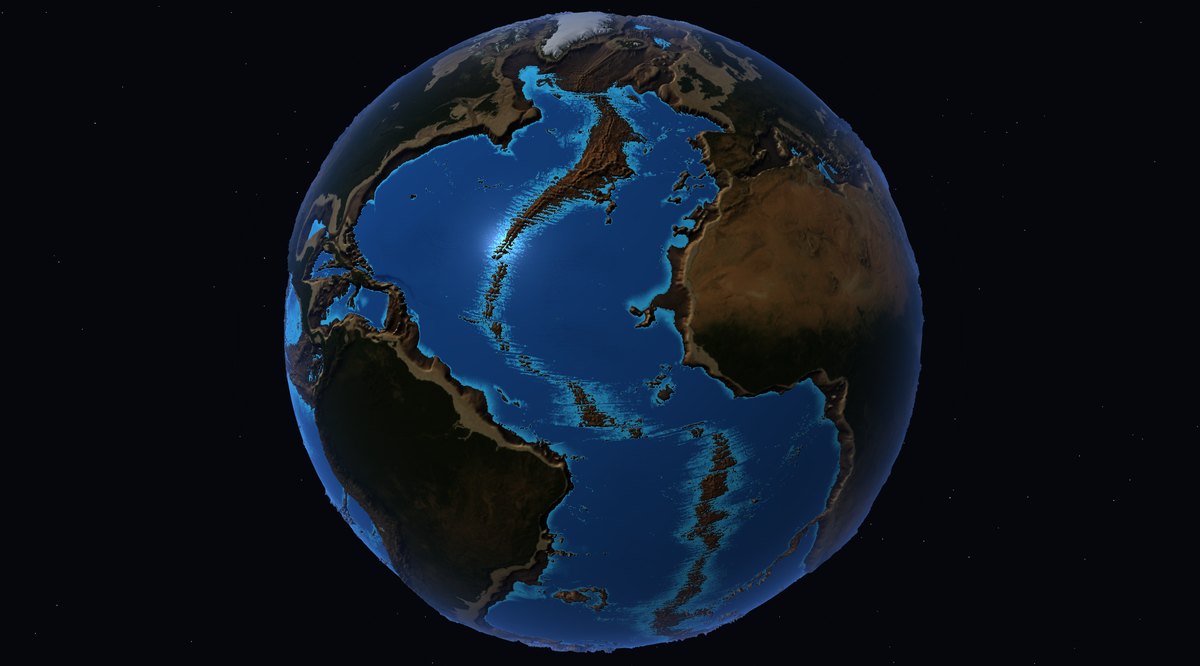
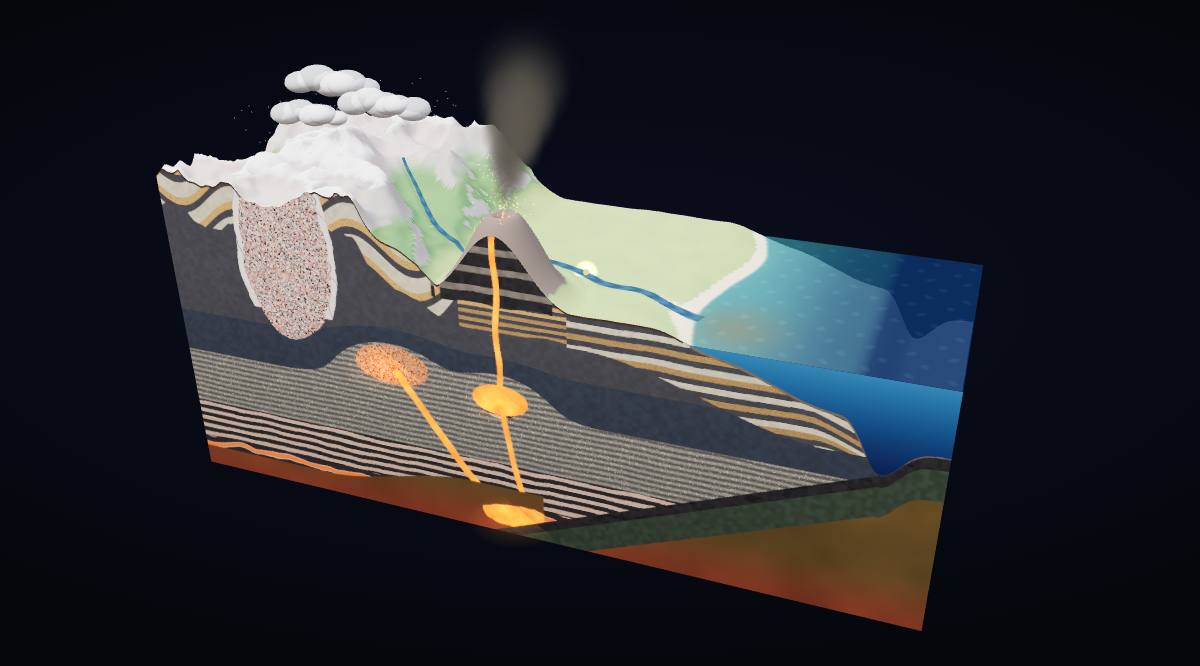
How can a grain of granite become sand, then shale, then schist — and how does bare rock become the soil that feeds us?
Launch ↗Teacher notes
GEOLOGY
The ground under your feet is drifting a few centimetres a year, and the oceans hide the longest mountain range on Earth. These interactive geology labs let pupils see the planet the way geologists do: as something that moves, cracks, melts and builds itself again.
Pupils wind time back to Pangea, cut the Earth open, drain the oceans and follow a rock from lava to sand and back. Most labs are 3D globes built from real data.
Create a free account →Watch the continents drift over 540 million years, crash together into Pangea and split apart again, and see where they were when the dinosaurs lived.
See why earthquakes and volcanoes line up along plate edges, cut the Earth open to see its layers and drain the oceans to reveal ridges, trenches and seamounts.
Tell igneous, sedimentary and metamorphic rocks apart, follow the rock cycle and see how soil forms, layer by layer.
Each lab opens on one question, pitched at the right level: most have an Explorer level for younger pupils and a Scientist level for older ones.
Move a slider, peel back a layer, add something or take it away. The model answers straight away.
Short challenges ask for a prediction before you look, then for what you saw in your own words.
A globe on the board that turns, opens and runs through time makes processes visible that a textbook can only describe. Each lab has teacher notes with questions to ask, common misconceptions and the sources of its data.
Perfect for the questions that come up on holiday or in the news: why that volcano, why that earthquake, why that beach is black.
Yes. Imagzle Learning is in beta: a free account opens every lab. After the beta a few labs will be part of a paid plan, each marked as such, and we will tell you at least 30 days before.
From about 8 to 16, from the first rocks and volcanoes in primary school to plate tectonics and the Earth’s interior in secondary.
In Geography, alongside rivers, the atmosphere, countries and time zones. Geology keeps to the solid Earth: its plates, its layers and its rocks.
No. The labs run in an up-to-date web browser. A recent computer or classroom board gives the smoothest 3D.