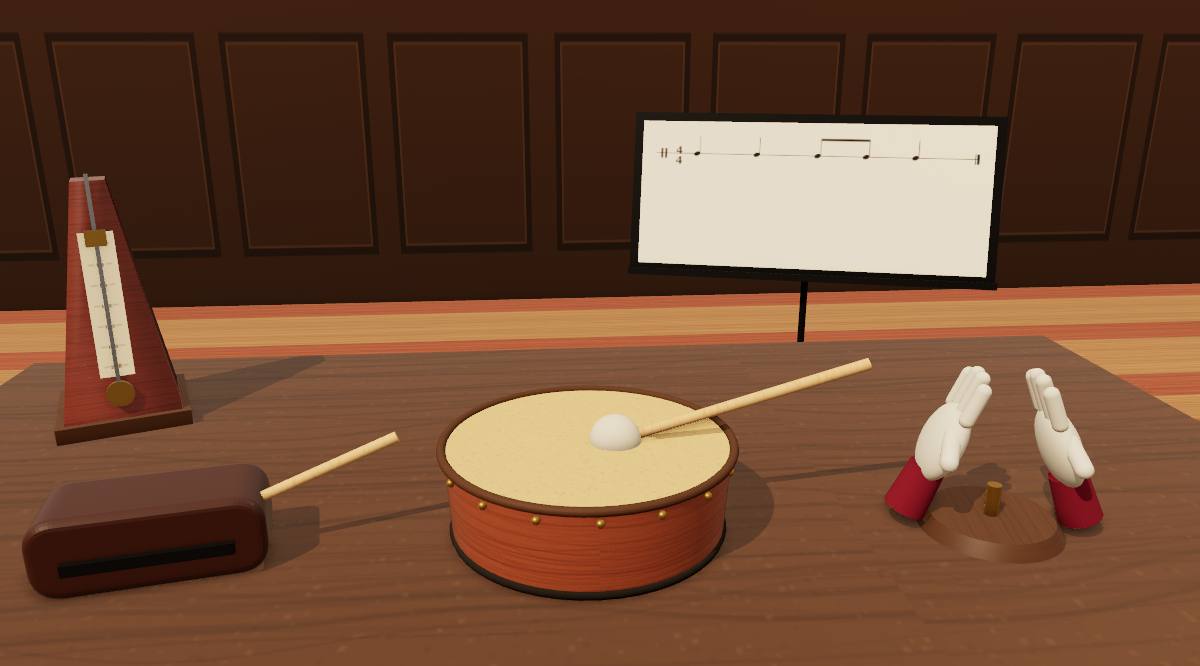
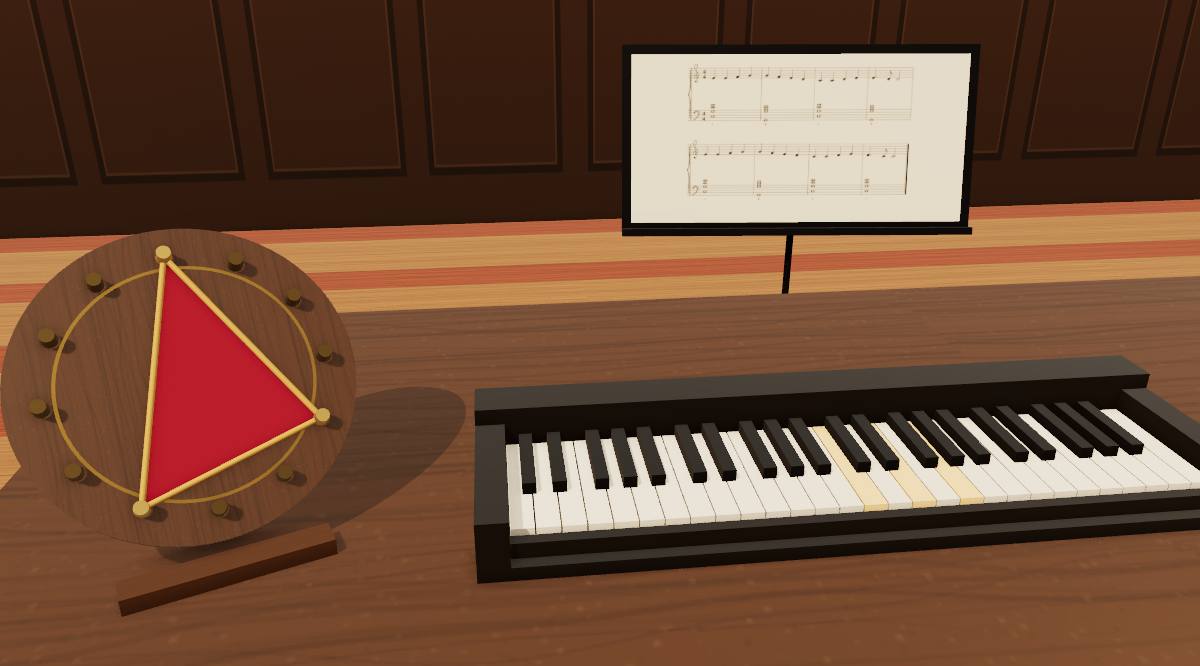
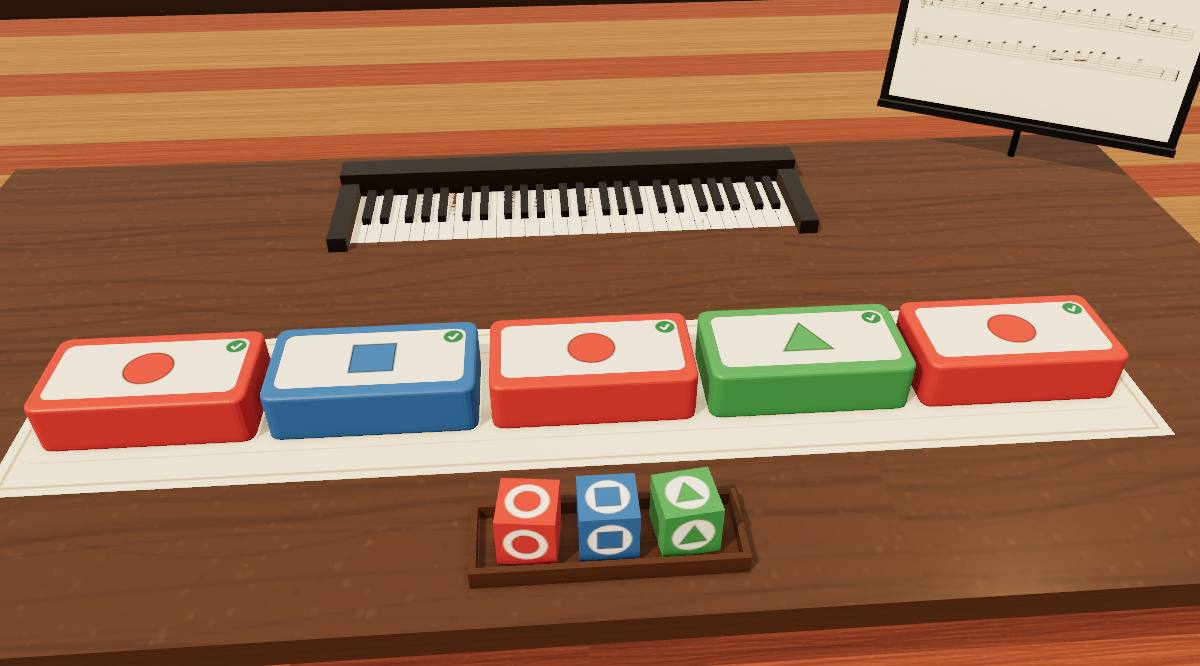
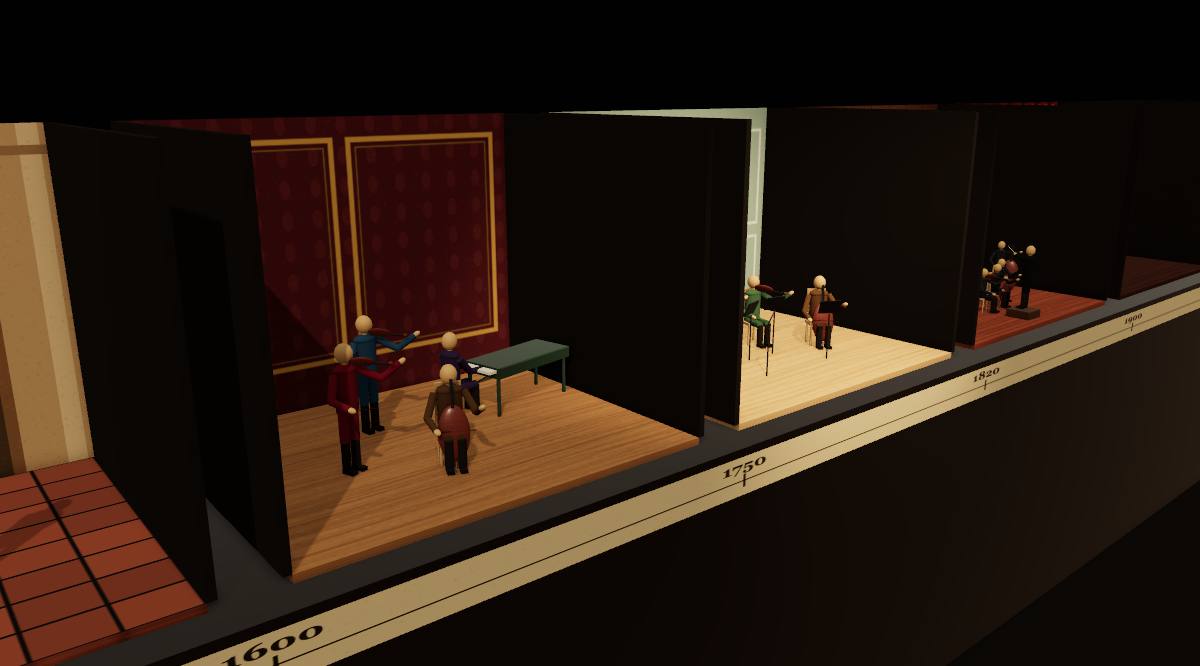
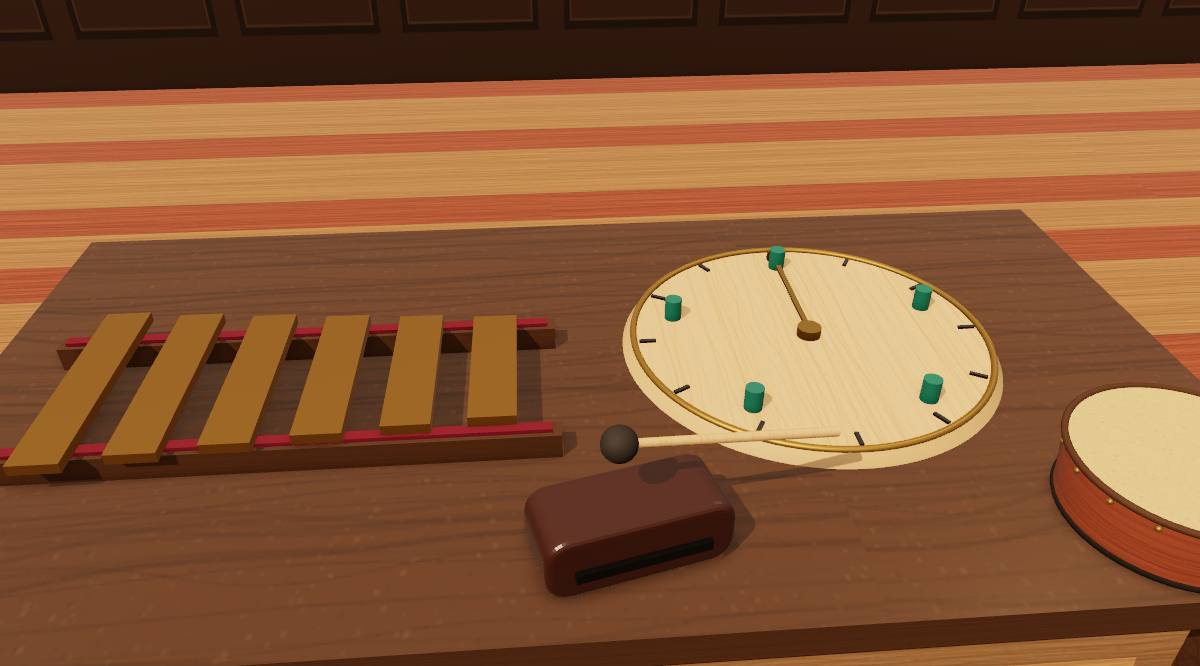
FreeScales and rhythms from several traditions: the pentatonic, slendro as a model, raga Yaman, maqam Rast, the octave in equal steps and cents, cross-rhythm, the 12/8 bell pattern and son clave10–20 min · Ages 10–18Years 5–9
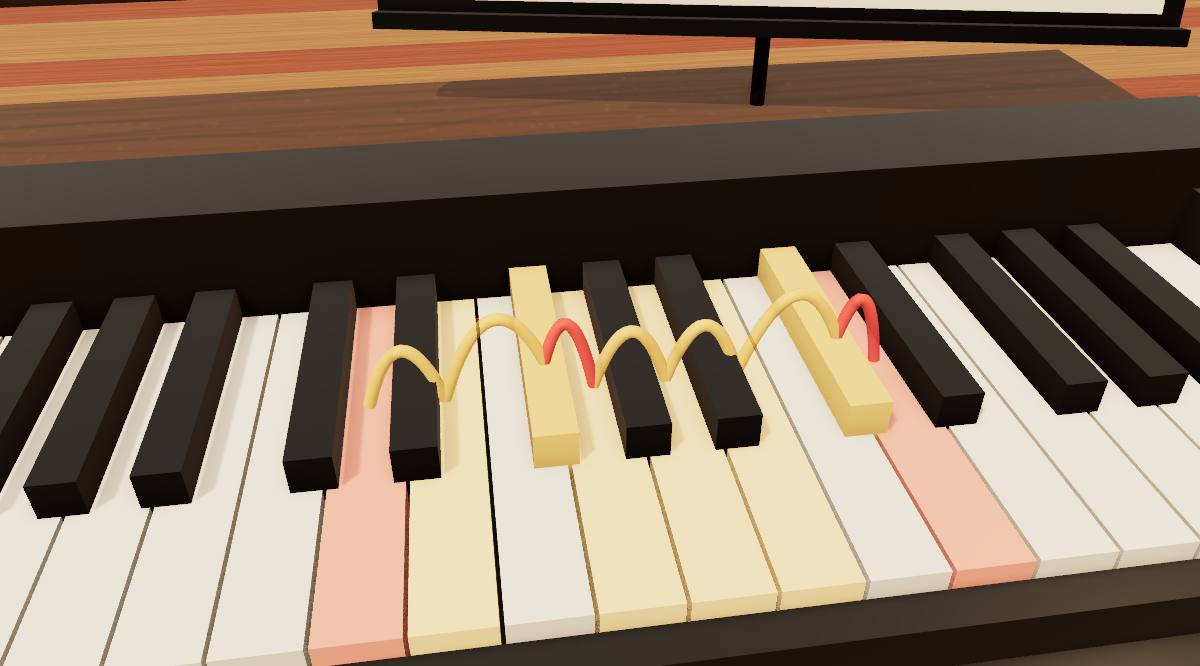
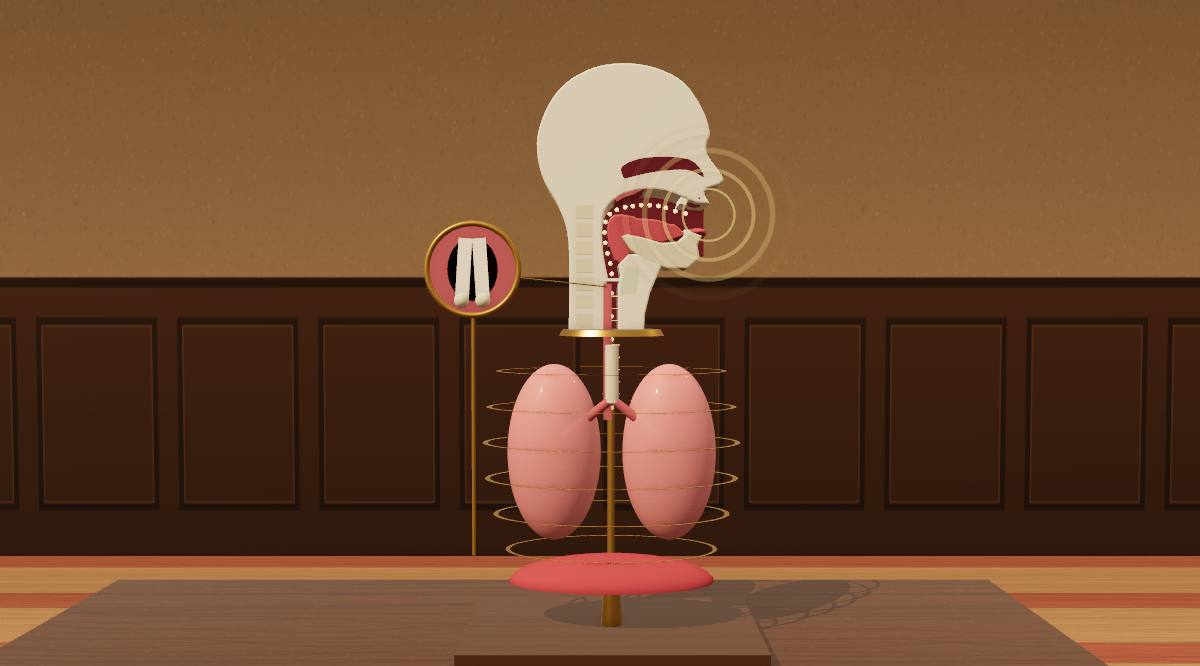
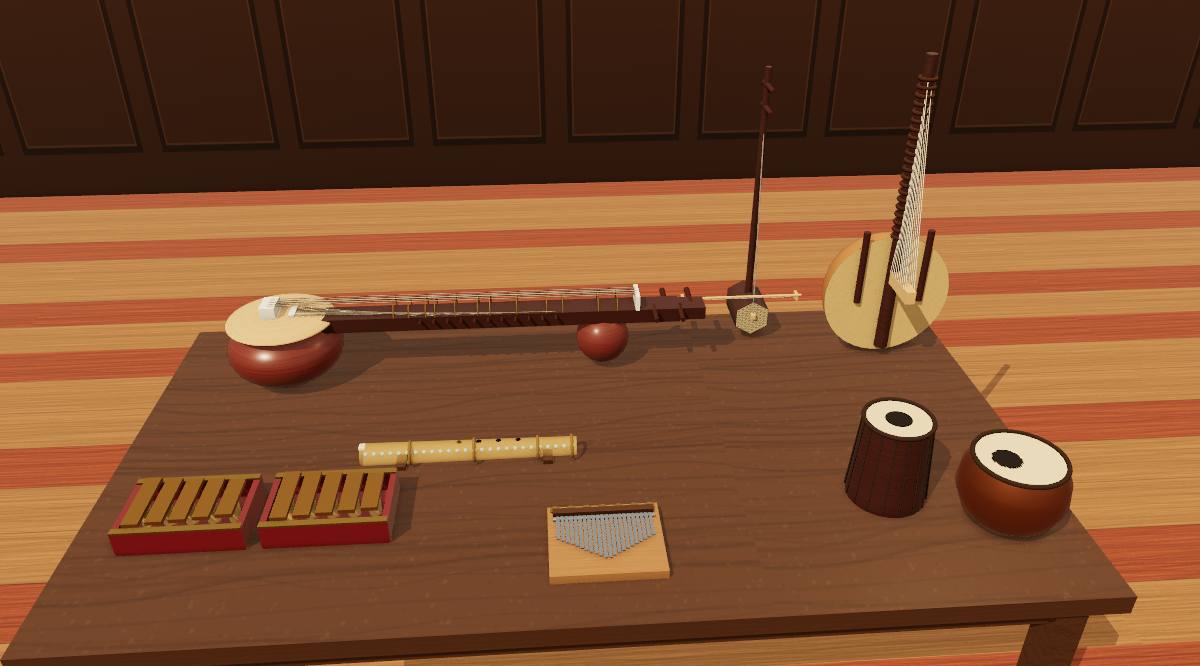
FreeHow seven instruments from five continents make their sound: what vibrates first, partials, the sitar’s buzzing bridge and sympathetic strings, the tabla’s harmonic drum, gamelan beats and the Hornbostel–Sachs families10–20 min · Ages 8–16Years 3–9
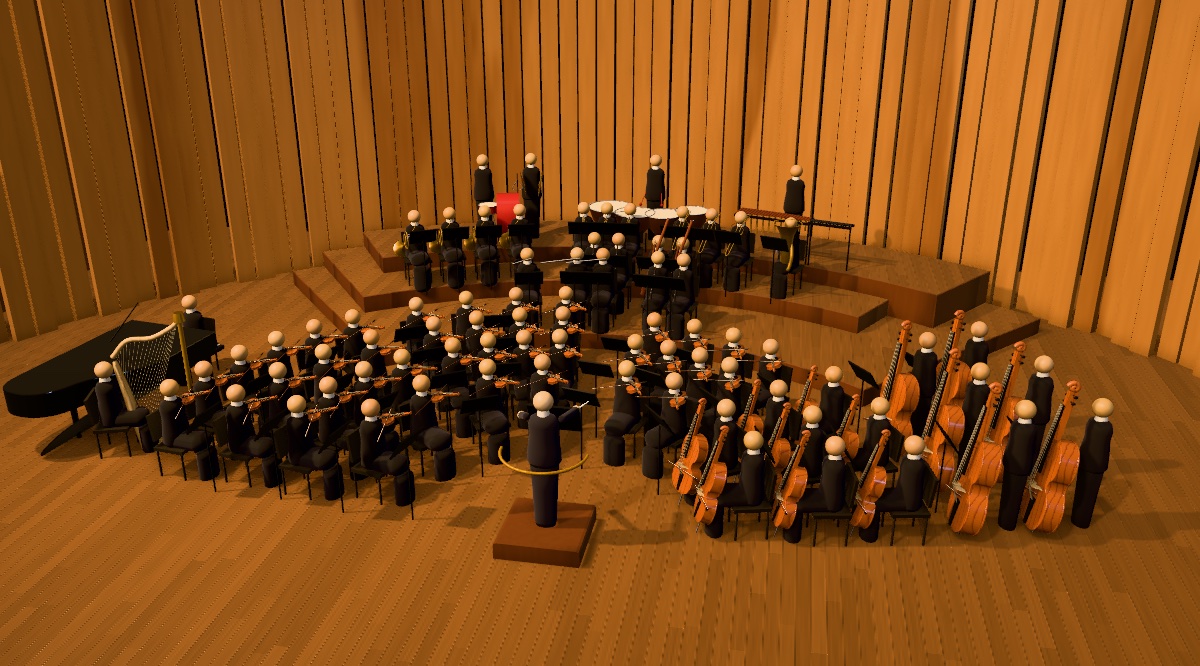
An orchestra can sound like one enormous instrument. These interactive music labs take it apart: pupils sit in a 3D concert hall, tap any player to hear their instrument, and find out how a violin, a trumpet and a timpani each turn movement into sound.
Then they pick up the baton. Conducting famous melodies, they speed the orchestra up, quieten it down and bring the sections in and out.
Strings, woodwind, brass and percussion in their real seats. Tap a player to hear a phrase, hear each family in turn and learn how scientists group instruments by the way they make sound.
How an instrument makes a note
Turn an instrument round life size, play its range on a keyboard and see its sound drawn as a wave. Change a string’s length and tension, or a brass tube’s length and valves, and hear the note move.
Conducting
Stand behind the conductor’s desk with Beethoven, Rossini or Vivaldi. Beat time to set the tempo and the volume, bring families in and out and follow a live score.
The instrument makers
Visit a Cremona luthier’s bench where a violin comes apart into its parts and woods, and see how the hammers of Cristofori’s first piano strike soft or loud.
How a lab works
Start with a question
Each lab opens on one question, pitched at the right level: most have an Explorer level for younger pupils and a Scientist level for older ones.
Change one thing
Move a slider, peel back a layer, add something or take it away. The model answers straight away.
Explain what happened
Short challenges ask for a prediction before you look, then for what you saw in your own words.
For teachers
Ready for a listening lesson on the board, before a concert trip, or as the way in to the physics of sound. Teacher notes suggest questions to ask and how to split the activities across lessons.
For families
For children who have just started an instrument, or are wondering which one to choose: they can hear them all side by side.
Questions people ask
Are these music activities free?
Yes. Imagzle Learning is in beta: a free account opens every lab. After the beta a few labs will be part of a paid plan, each marked as such, and we will tell you at least 30 days before.
What ages are they for?
From about 6 to 14. The Explorer level suits younger children; the Scientist level adds the physics of sound and the full orchestral score.
Do children need to read music?
No. Everything starts from listening; the score is there to follow along, not to read in advance.
Do I need to install anything?
No. The labs run in an up-to-date web browser. A recent computer or classroom board gives the smoothest 3D.